What Highly Successful Students Do

Every parent has heard some version of “I get it, I just made a careless mistake” or “I studied, I just blanked on test day.” After years of working with students across every level, we’ve noticed a consistent pattern: the students who improve fastest aren’t necessarily the ones who are “naturally smart” or who log the most study hours. They’re the ones who study differently. Below are four habits that separate students who plateau from students who keep climbing, along with how you can help build each one at home.
1. They Treat Mistakes as Important Learning Opportunities
The average student gets a problem wrong, feels a flash of frustration, and tells themselves “I know this, I just wasn’t careful.” Then they move to the next problem and inevitably make a version of the same mistake a week later. Nothing has actually changed because no meaningful adjustments were made. “Being more careful” is broad and difficult to put into practice. What does “being more careful” actually entail? And how can this behavior be entrenched into actionable steps? The strongest students treat every wrong answer the way an athlete treats game film: not as a moment to feel bad about but as data to break down. Was it a misread question? A rushed calculation? A rule they half-remembered and misapplied? “I was being careless” is almost never the real answer- it’s a comfortable placeholder that lets a student avoid figuring out what actually happened. Once the real cause is identified, they can build a specific fix for it, the same way a coach doesn’t just tell a player to “try harder” but adjusts a specific technique.
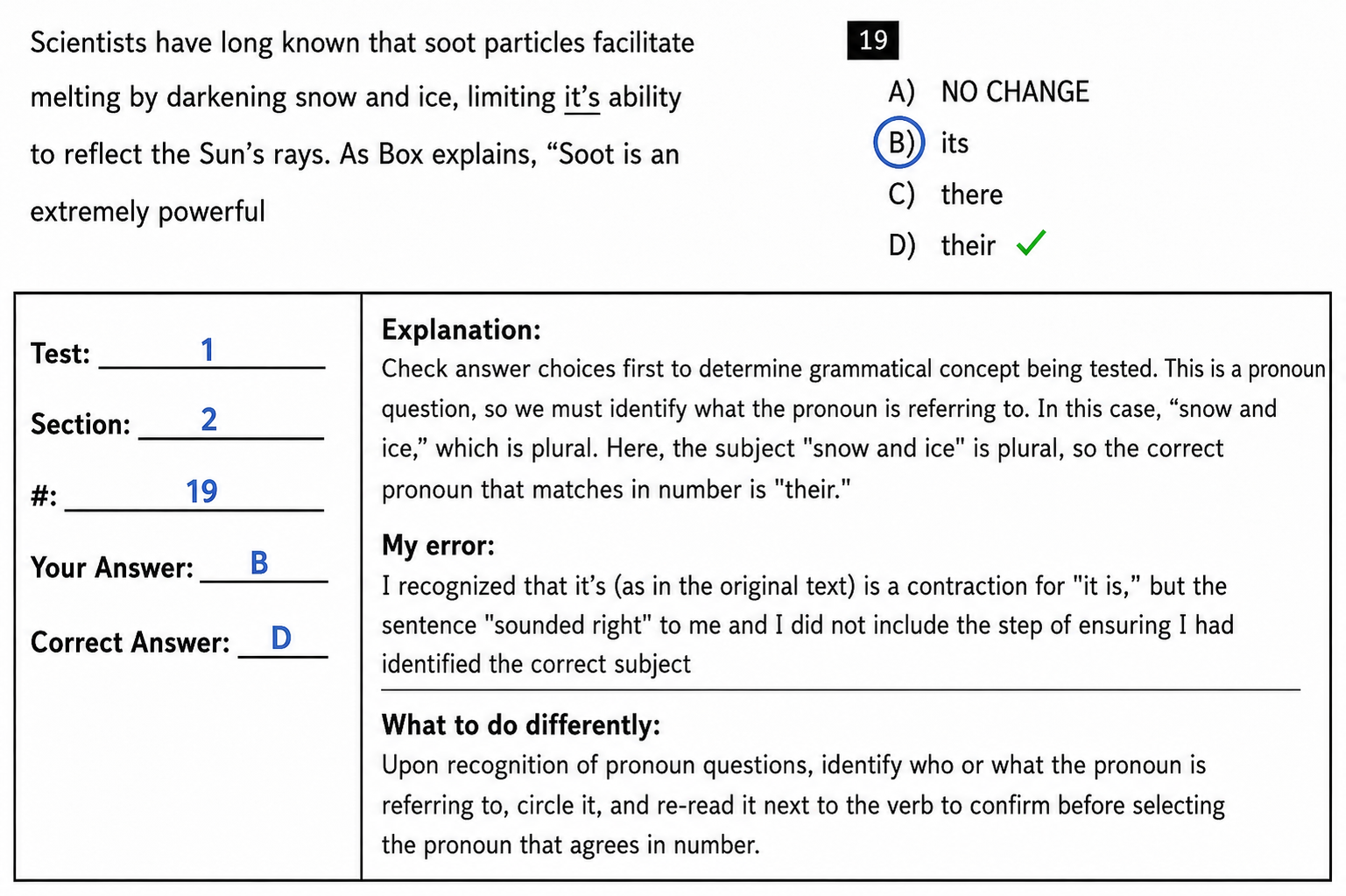
What you can do: Have your student keep a simple error log. There are many formats, but most simply, it could be a running list with three columns: What I did, What actually went wrong, and What I’ll do differently next time. The habit of writing the third column is what rewires behavior; thinking “I’ll be more careful” rarely survives contact with a real test.
2. They Anticipate and Address the Forgetting Curve instead of Cramming
In the 1880s, psychologist Hermann Ebbinghaus ran a simple experiment on himself and discovered something every student experiences but few plan around: we forget the majority of new information within a couple of days unless we revisit it. Plotted out, this is the “forgetting curve” - steep at first, then flattening the more a piece of information gets reinforced over time.
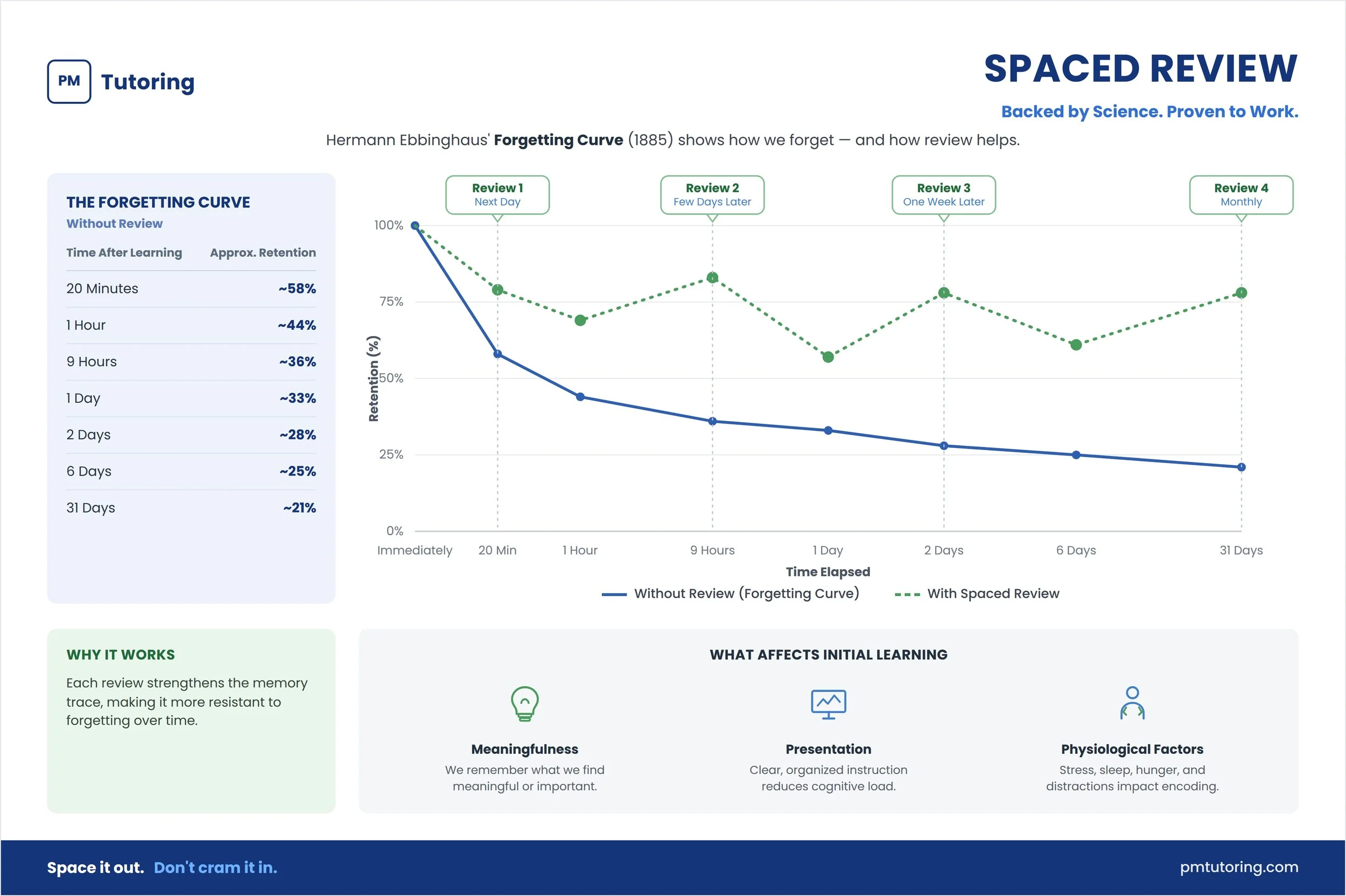
This is exactly why cramming doesn’t hold up, especially as content accumulates. A musician doesn’t learn a piece once, the night before a recital, and expect it to stick; they return to it in short sessions over weeks, and every time they replay it, the memory gets more durable. A basketball player doesn’t drill free throws once and call it mastered; they come back to fundamentals constantly, long after they’ve “learned” them. Academic material works the same way.
What you can do: Build in short, spaced touchpoints with dedicated protected time. Revisit new material the next day, again a few days later, then about a week out, then a monthly check-in. Fifteen minutes of reviewing old material before starting new homework does more for long-term retention than an extra hour of cramming the night before a test.
3. They Engineer Their Environment Instead of Relying on Willpower
High-performing students generally don’t have more willpower than everyone else - they just rely on it less. Instead of sitting down to study and then fighting the temptation of a phone on the desk, they remove the temptation before it’s a decision at all: phone in another room, not just face-down and/or silenced; one consistent spot used only for focused work; materials laid out and organized so starting doesn’t require any negotiation with themselves in the moment.
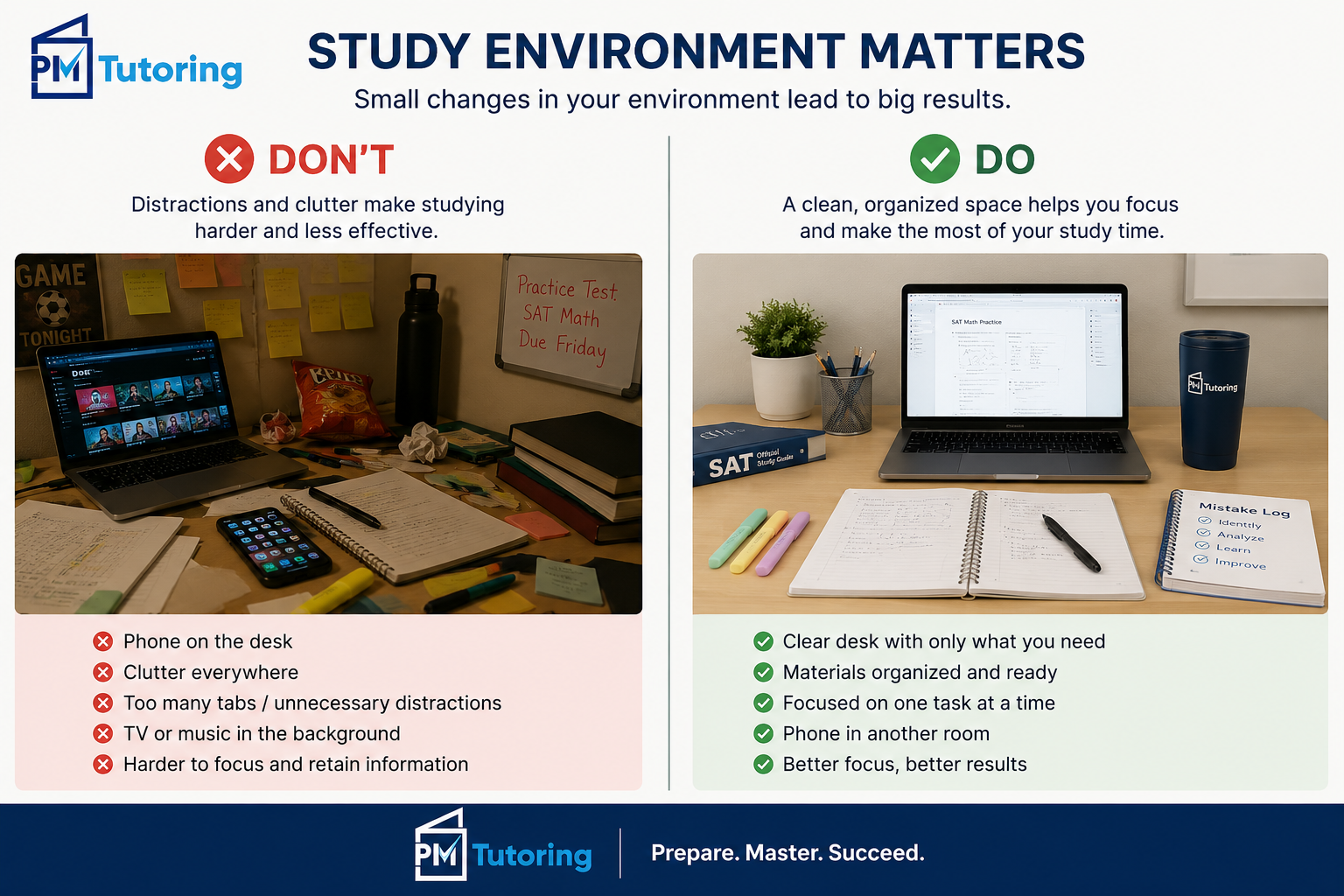
This matters even more now that schools are moving toward phone-free classrooms. The same principle that’s reshaping the school day is worth applying at home, where the temptation is arguably greater and with less monitoring.
What you can do: Help set up a “friction-free” study zone. The goal isn’t a perfect environment but one where the default action is the productive one. Focused work is efficient, effective work. Distracted work makes studying take longer and feel like more of a drag.
4. They Build Deep, Flexible Understanding Rather Than Memorize Steps
A student who has memorized a specific set of steps tied to exactly how a problem was phrased in class or homework will freeze the moment the same concept shows up dressed differently, whether that’s a reworded word problem, a passage that tests the same reading skill from a new angle, or a test question deliberately written to look unfamiliar. A student who understands the fundamentals and why each step is taken along the problem-solving process can recognize the underlying concept no matter how it’s packaged.
Think of the difference between a musician who’s learned a song by ear versus one who’s only memorized finger positions for that one piece. The first can transpose it into a new key without missing a beat, but the second is lost the moment anything changes. Standardized tests, in particular, are built to probe for this exact difference, but it matters just as much in the classroom, where teachers vary their framing constantly. This is prime critical thinking!
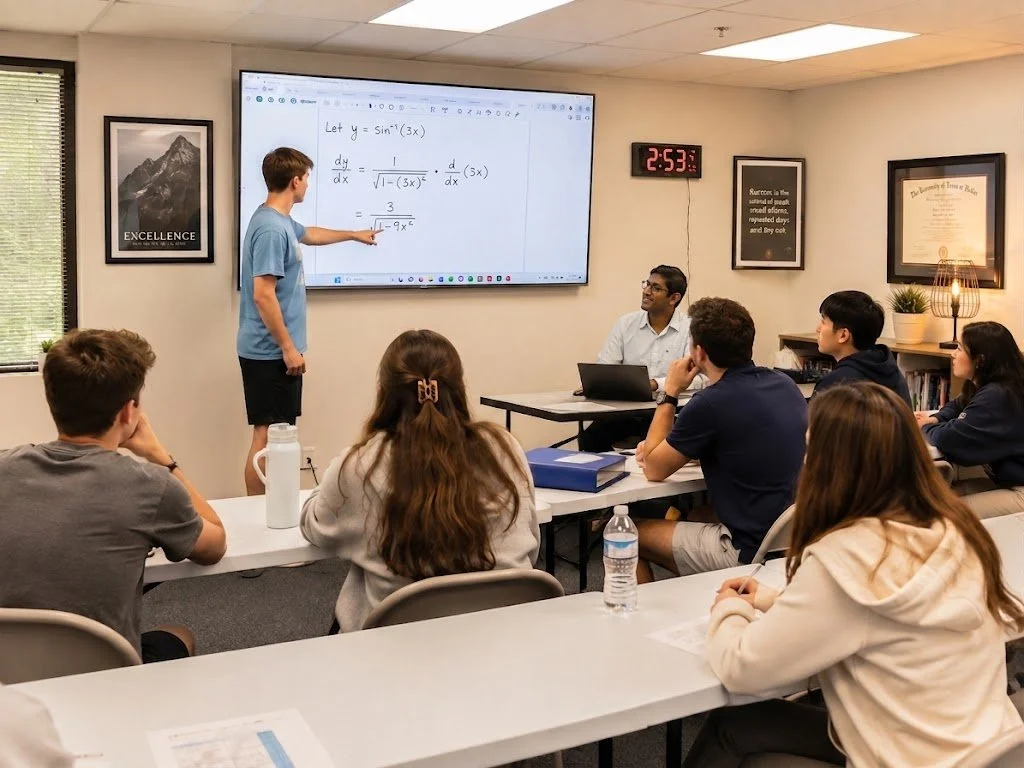
What you can do: After your student learns something new, have them explain it back in their own words. Better yet, have them explain it as if teaching someone else. If they can only repeat memorized steps and can’t explain the reasoning behind them, that’s a sign of incomplete understanding.
The Common Thread
None of these four habits are about working longer hours or being naturally gifted. Successful students are deliberate and intentional: diagnosing mistakes instead of excusing them, spacing out review instead of cramming, designing an environment instead of relying on will power, and building understanding instead of memorizing steps. You can’t hand your student more discipline, but you can help build the systems that make these habits close to automatic. That’s the same framework we build into every tutoring session to empower students to face whatever the next challenge is with confidence and independence.